
Pavers, flagstone, or boulders: picking the material
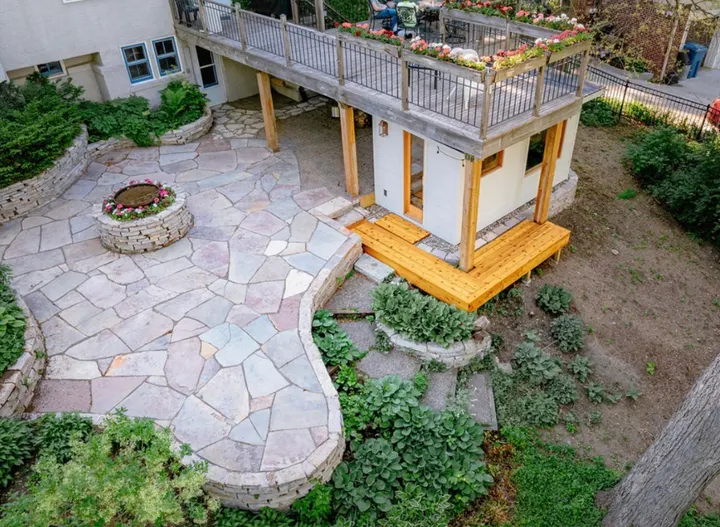
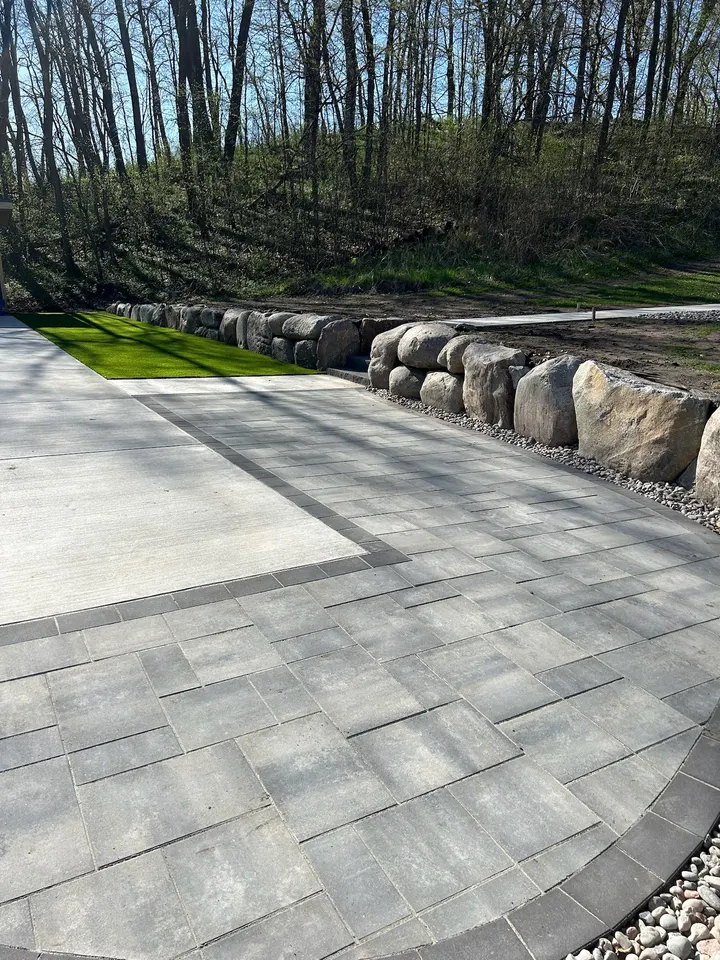
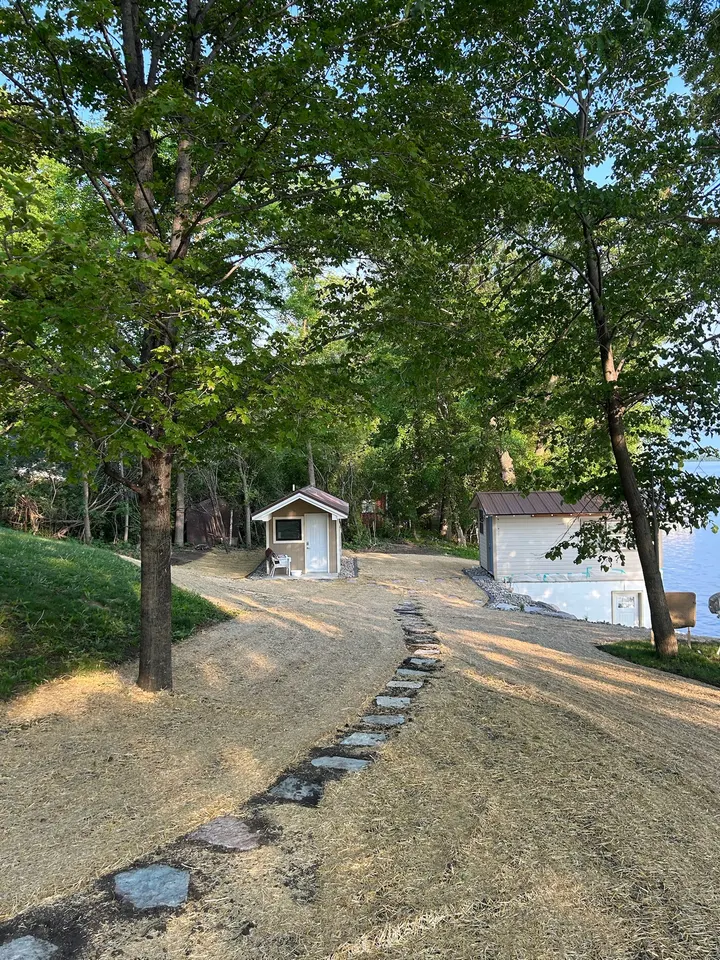
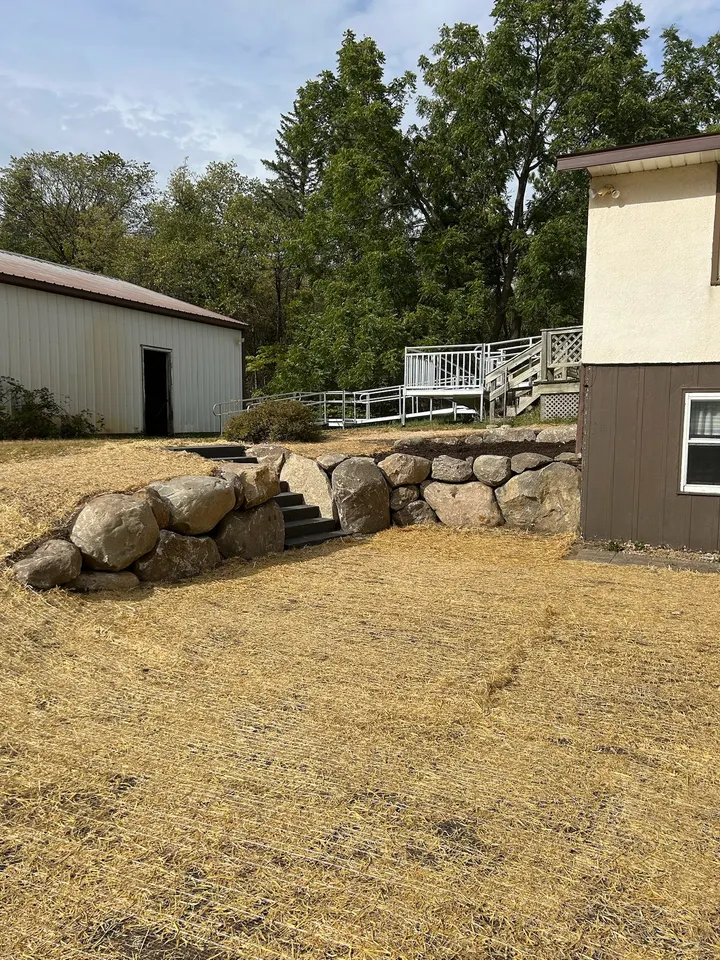
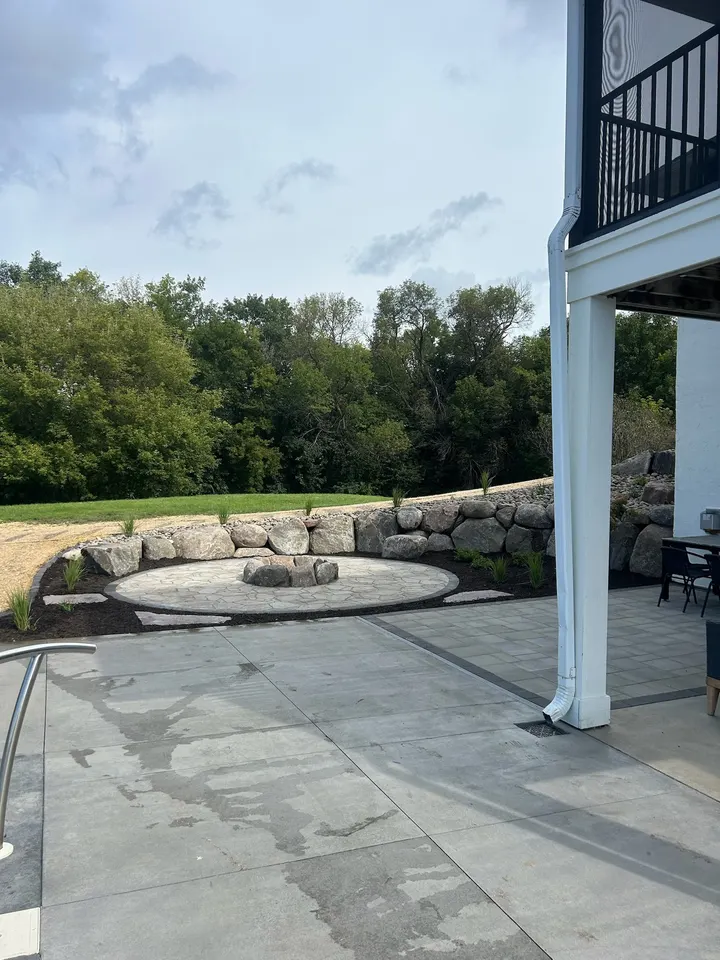
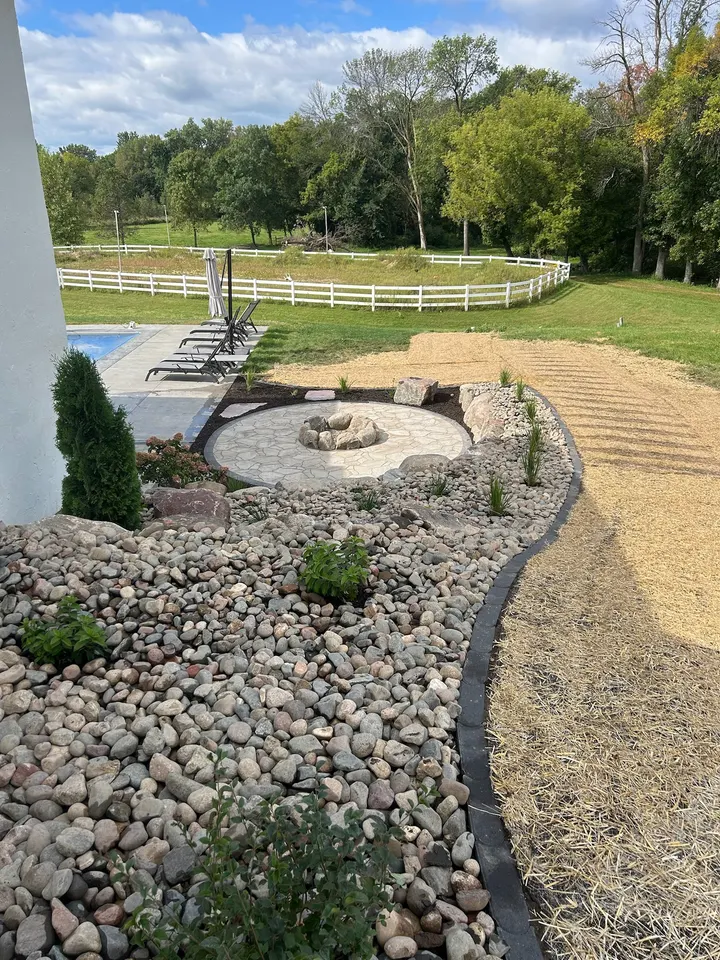
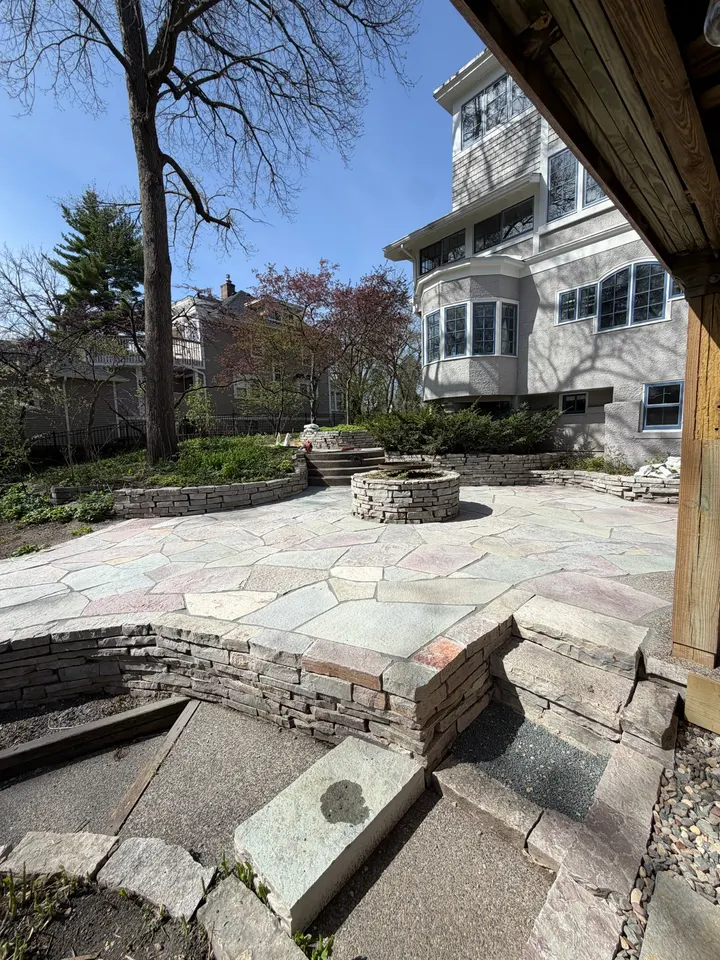
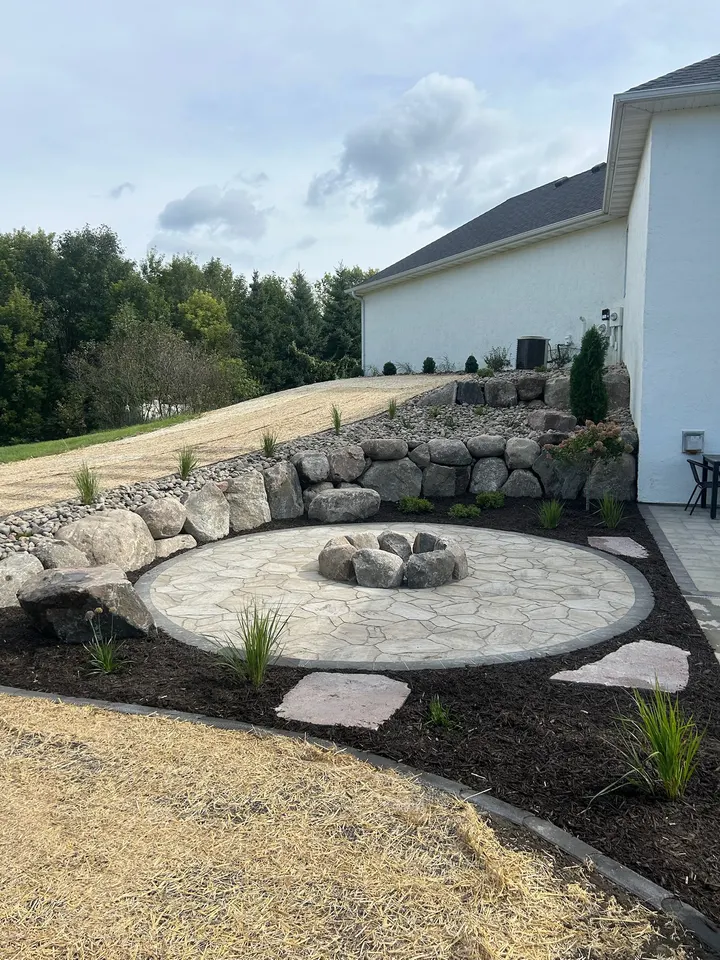
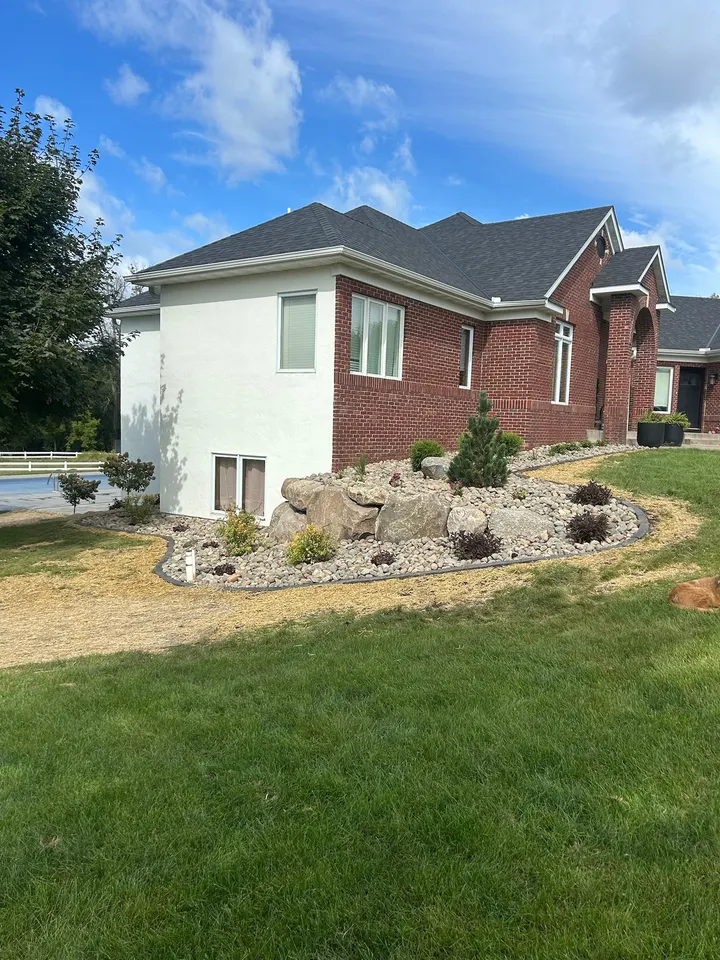
Concrete pavers are the workhorse. They come in set thicknesses (60mm for patios and walks, 80mm for driveways), lay fast in a repeating pattern, and any single unit can be pulled and replaced later. Natural flagstone is the other patio surface we build with. The stone we reach for most is Chilton, a dense dolomitic limestone quarried around Chilton, Wisconsin, with grays, buff, and muted pink and purple in the same pallet. It handles freeze and thaw well, but every piece is irregular and has to be cut and fitted by hand, so a flagstone patio takes longer than the same square footage in pavers. Boulders are not a paving surface. We use them for walls, fire rings, lake steps, and the edge where a patio meets a slope. Glacial fieldstone from this area sets naturally and looks like it belongs on a Wright County lot because it came out of one.
- Pavers: fastest to lay, easiest to repair, widest range of patterns and borders
- Chilton flagstone: hand-cut natural stone, tight joints, no two pieces alike
- Boulders: walls, fire rings, steps, and edges, not a walking surface
Base prep for pavers in Wright County clay
The soil under most yards from Cokato to Buffalo is glacial till: clay that holds water, swells when wet, and heaves when it freezes. Pavers set on a thin base over that clay tip and roll within a few winters. So we excavate deeper than the paver and bedding alone need, usually 7 to 10 inches below finished grade for a patio and more for anything a vehicle will drive on. A geotextile fabric goes on the clay subgrade to keep it from pumping up into the aggregate. Then we bring in Class 5 crushed limestone and compact it in lifts with a plate compactor, not in one dump. Over the compacted base goes one inch of coarse bedding sand, screeded flat and pitched about a quarter inch per foot away from the house. Pavers set on that, get cut in at the edges, and are locked with an edge restraint spiked into the base. Last, polymeric sand is swept into the joints, compacted, and misted so it sets and keeps ants and washout out.
- Excavate 7 to 10 inches for patios, deeper for driveways
- Geotextile on the clay, then Class 5 compacted in lifts
- One inch of bedding sand, pitched away from the house
- Edge restraint spiked into the base, polymeric sand in the joints
Walls that hold in frost and clay
A retaining wall in Minnesota is a drainage project with stone in front of it. Water trapped behind a wall freezes, expands, and pushes. Clay behind a wall holds that water all winter. So every wall we build gets a compacted aggregate footing below grade, clean drainage stone behind the face, and a perforated drain tile at the bottom that runs to daylight. Taller walls get geogrid layers pinned back into the compacted fill. Block, boulder, and dry-stacked natural stone each suit different spots, and the retaining wall page goes into each one.
Fire features and seating walls
A fire pit set into a patio is the most-requested add-on we see. We build them in stacked boulders, cut natural stone, or wall block with a steel ring or firebrick liner, wood-burning or plumbed for gas by a licensed gas fitter. A low seating wall around part of the pit doubles as a retaining edge where the yard slopes. Clearance from the house, deck, and overhangs follows your city's code, and we lay the pit out to meet it before anything gets set.
What drives the cost of a hardscape project
Every hardscape quote comes down to a handful of things we can measure on a site visit.
- Square footage of paving and linear feet of wall
- Material: pavers, Chilton flagstone, boulders, or wall block
- Excavation depth and how much clay has to leave the site
- Access for a skid steer and delivery trucks
- Wall height, which drives geogrid, engineering, and permit needs
- Drainage work: drain tile, catch basins, regrading
- Steps, borders, fire pits, and lighting added to the base job
When we would talk you out of it
- A flat, low-traffic pad on a tight budget: a broom-finish concrete patio costs less per square foot than pavers and we pour those too
- A wall over four feet on a lot with a house or driveway sitting above it: that usually needs an engineer's stamp first, and we will tell you before quoting
- Landscaping and planting on their own: we grade, build, and set stone, but we are not a nursery
How it goes
- 1
Call or send the form
Tell us the yard, the slope, and what you want to do out there. We answer the same business day.
- 2
Site visit
We walk the grade, probe the soil, find where water goes now, and check truck and skid steer access.
- 3
Written quote
Material, base depth, drainage, and wall specs in writing, with options priced separately so you can pick.
- 4
Build and clean up
Excavate, base, set, lock, and sweep. Spoils hauled, beds raked, and the yard left ready to seed or sod.
Questions we get asked
Should I pick pavers or natural flagstone for a patio?
Pavers cost less per square foot, go down faster, and are easy to repair one unit at a time. Chilton flagstone is hand-cut natural stone with color no manufactured product matches, and it takes longer to fit. Both last in Minnesota when the base is right. Pick on budget, look, and how much you value one-of-a-kind stone.
How deep does a paver base need to be in Wright County clay?
For a patio or walkway we excavate about 7 to 10 inches below finished grade: geotextile on the clay, 4 to 6 inches of compacted Class 5, one inch of bedding sand, then the paver. Driveways get 8 to 12 inches of base. Thinner bases on clay heave and roll within a few winters.
Do you use polymeric sand in the joints?
Yes. Polymeric sand is swept into the joints, compacted so it drops to the bottom, and misted to activate the binder. It hardens enough to resist washout, weeds, and ants while still letting the joint flex through freeze and thaw. Plain sand washes out of the joints within a season or two.
Can you do the concrete and the hardscape on the same job?
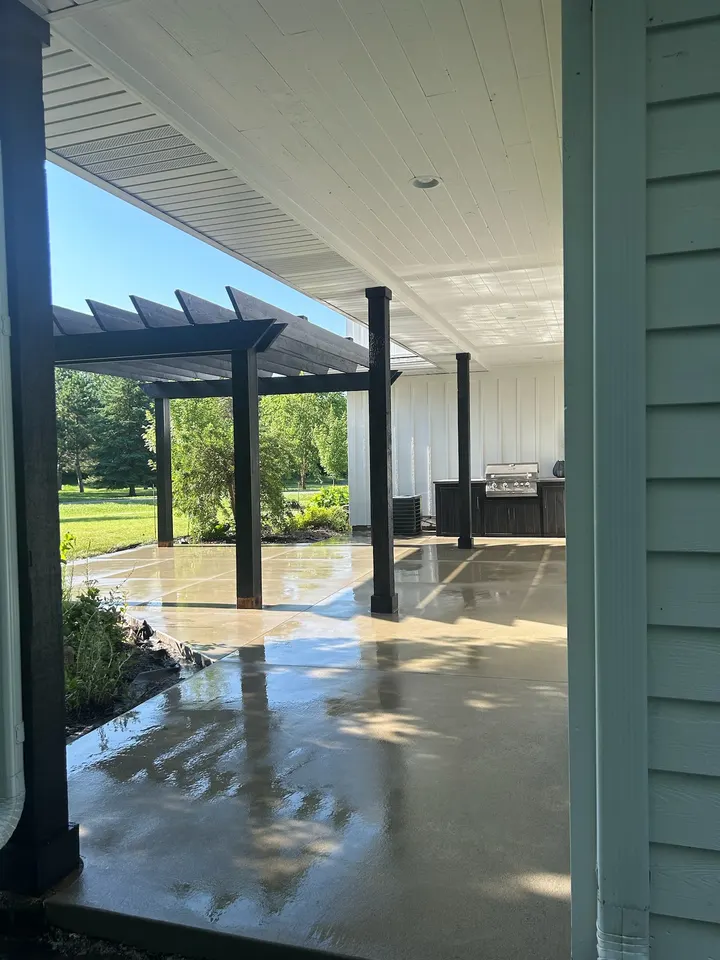
Yes, and it is the main reason people call us for a whole yard. One crew pours the patio slab or steps, builds the wall, sets the pavers or flagstone, and puts in the fire pit, in the order that keeps finished work from being driven over. No handoff between contractors.
When does hardscape season run in Minnesota?
Roughly mid-April to October, once the frost is out of the ground and before it goes back in. Pavers and walls can go a little later than concrete because there is no cure to protect, but a base compacted over frozen clay will settle in spring, so we do not push it.
Where we do this work
Hardscape across the towns around Cokato: Cokato, Dassel, Howard Lake, Annandale, Maple Lake, Buffalo, Delano, Hutchinson, Litchfield, Watertown, Winsted, Montrose. See the full service area.